

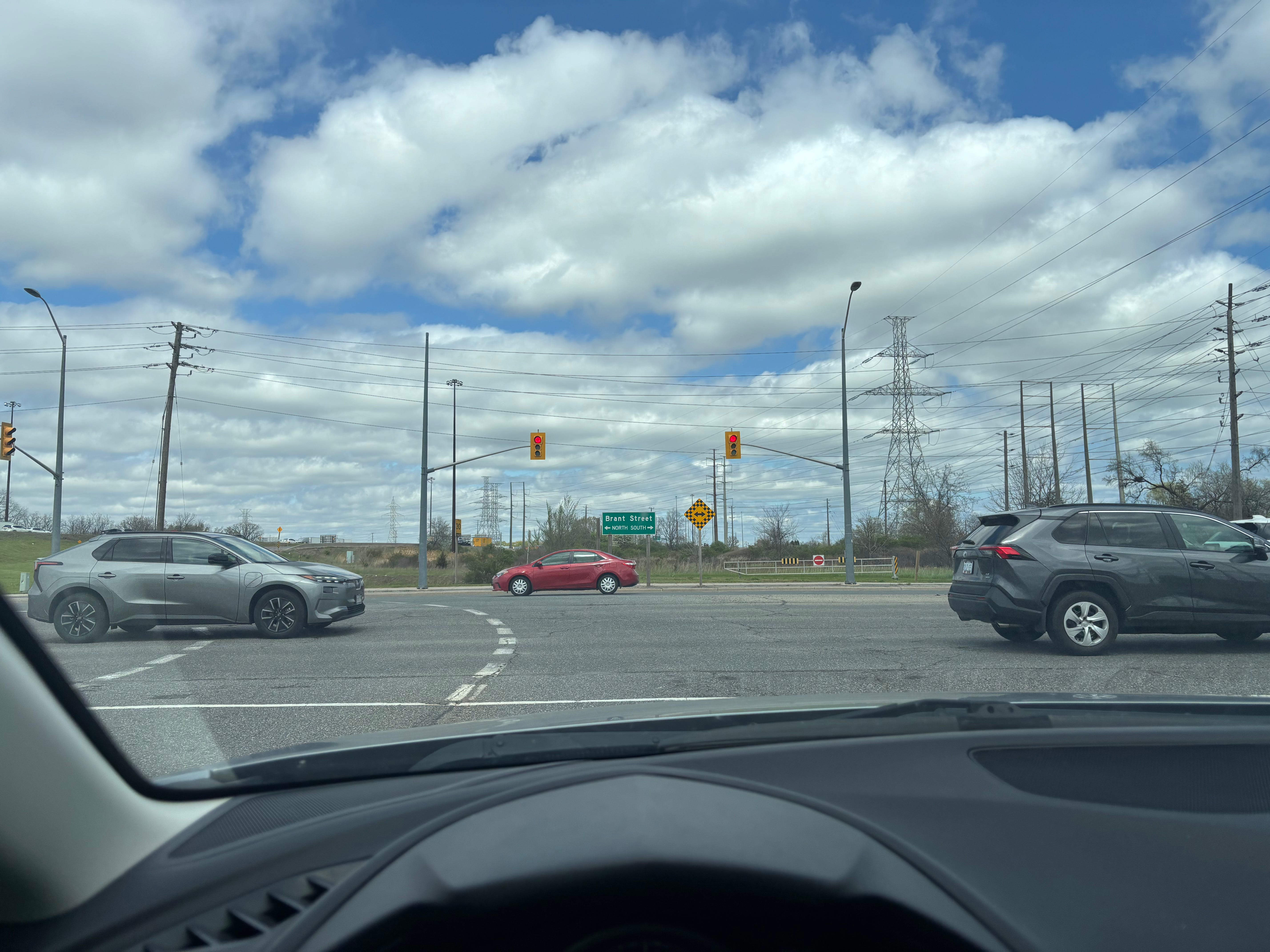
June 15th, 2023. I got an email notification while driving home. Subject line: OVC Admission!, from Admission Services at the University of Guelph.
My heart was pounding out of my chest. I waited for a red light and opened it.
The words went blurry. I was hyperventilating, making loud crying noises. “Congratulations and welcome to the OVC class of 2027!”
I was so sure I was meant to be a veterinarian. That was certain. What I had no idea about was whether I was ready to be a vet student—and nobody thought to ask me that question before I got here.
So if you’re heading into vet school, or still working toward it, this is the advice I wanted before I got here.
I’ll skip the part where I ask if you’re ready to be a veterinarian, because I know you know that answer by heart. You’ve rehearsed it through every job interview, every vet school interview prep session, every CASPer scenario. You feel it in your bones, and I wholeheartedly believe you! But before you get to be a vet, you have to survive 4 to 5 years of vet school first. It will be a full-time job whether you like it or not (mad respect for my colleagues who are doing this with kids and/or another job on the side. I honestly don’t know how you do it. You've already reached a level of enlightenment I can't fathom, like Chang in my previous article).
Vet school is NOT for the faint of heart. Let me tell you what you’re walking into.

1. It will take a toll on you, mentally and physically.
Late nights are part of the deal, unless you have practiced good study-sleeping habits (which I haven’t mastered). I’m talking regularly getting to bed at 12am, and that’s on a normal week, not even around test season. Unfortunately in vet school, test season is basically always, so do with that information what you will.
Imposter syndrome also hits different when you’re surrounded by a room full of other high-achieving, type-A people. We’re all suddenly small fish in a very big, very intimidating pond, which is both humbling and completely terrifying at the same time (if you feel like the big fish in the room, congrats, now you have to deal with the risk of becoming insufferable. Just kidding. Kind of).
Then there's the emotional weight of it all. We have a course called "Art of Veterinary Medicine," and although I sometimes dreaded going, it turned out to be one of the most real and useful things I've taken. It teaches you that diagnosing and treating an animal is only half the job. The other half centers around the client, involving navigating hard conversations, impossible dilemmas, and moments where an owner wants to do something you completely disagree with. For example, an owner with cost concerns requests euthanasia for a healthy dog with behavioral issues. Things get real heavy around here.
Remember CASPer? That was just the beginning of your lifelong journey as a high-EQ empath. Vet school is full of those scenarios, and when you’re practicing as a veterinarian, those skills come back aggressively and with real stakes. You’ll constantly be weighing stakeholders, ranking priorities, making calls that don’t have a clean right answer. It's a good skill to build. Just don't let it turn you into a people-pleaser who forgets to include yourself in the equation. More on that rant another day.

2. The studying is a lot. Like, a lot a lot.
More than undergrad, more than grad school, wayyy more than you’re probably picturing right now. In my past three years, I’ve learned 500+ new terms covering bacteria, viruses, parasites, diseases, pathological processes, anatomical structures, etc etc etc. Your human-sized brain will feel full to the brim, and then it will keep getting fuller, until you feel like nothing is sticking anymore (and then sometimes, that same full brain will surprise you, like when a technician asks you the fluid rate for a cat spay and the answer just comes out. Phew, dodged that one!).
Before vet school, I had to pause my undergrad and work for 8 months to meet OVC’s Ontario residency requirements. During that time, I truly missed school, and probably romanticized studying the way you only can when you’re not actually doing it. That feeling has not returned a single time in three years of vet school (hah).
One time, I was so sick of studying, that I told my mom (fully translated from Vietnamese): “If I ever come to you saying I want to do more schooling after vet school, please remind me of these cursed days, so I don’t stupidly dive head-first into that bottomless pit again.”
And Mom was like: “for real? okay 🙂”

3. Grades will humble you.
The academic rigor ramps up fast. First year is the transition year, so it will be manageable. Second year hits hard with tests almost every week—the classic Wednesday-and-Friday duo, which I like to call "double it and give it to the next crying vet student". Third year is the same rhythm, just harder across every single course. Then in fourth year, you face the NAVLE, which basically translates to Nightmarish Agonizing Veterinary Licensing Exam (unofficial name).
Your grades might drop from what you’re used to, with 80s and 90s from undergrad turning into 60s and 70s. You might even fail a test somewhere along the way (I have, it wasn’t fun, but you get through it by being a persistent, stubborn little leech who refuses to let go of the ultimate veterinarian dream). It’s also a pretty grounding reminder that your grades are not your worth. That’s something I’m still working on. A lot less than before, but still, it’s a tough thing to unlearn.
It makes sense why grades are put on such a pedestal as the main factor in getting into vet school. I used to disagree with this, because there is so much more to a person than a grade, and let’s be honest, students can strategically pick easier courses to boost their numbers. But I’ve come around to understanding the logic behind it: if you don’t have the study habits to carry you through weekly tests, you are, to put it plainly, fully-freaking cooked.
4. You will have to do uncomfortably gory things.
After first year, I thought I might want to be a pathologist. I liked anatomy labs and figured I had a strong enough stomach to handle whatever came next. Then our first full post-mortem necropsy lab arrived.
I was mortified.
[Content warning: gory description ahead. Skip to the next section if you’d rather not. TLDR: vet school labs can get bloody and intense.]
The smell of formalin, flesh, and blood hit me the second I walked in. It was nauseating to the point I felt like my stomach was churning butter, a feeling I’ll never forget. We learned how to do a full necropsy on an animal. And when I say full, it is exactly what it sounds like. No parts were left unexplored. The head portion was the hardest for me personally, though it's also one of the most critical to know, since that's how you collect samples for rabies testing.
I've linked the postmortem examination and rabies sample collection steps for reference if you are interested, and I am adding a very sincere warning: DO NOT TRY THIS AT HOME, I REPEAT, DO NOT. Save it for the pathology labs please, you’ll have plenty of time then to feel organs.
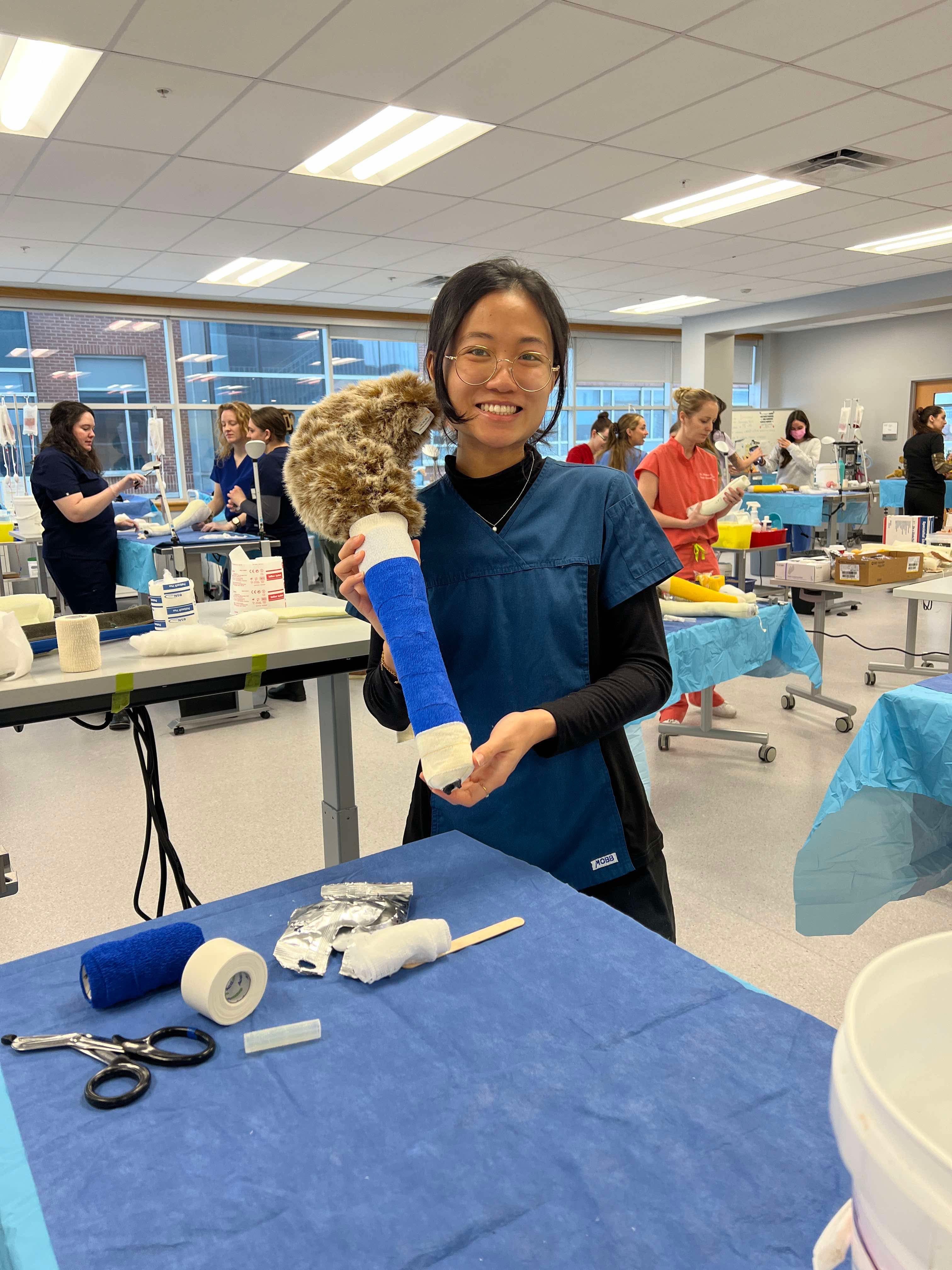
I know it’s easy for me to say all of this from the other side. But I want to be honest with you in a way that vet school ads won’t be: getting in was actually the easier part. Surviving it, let alone succeeding, requires a kind of endurance that no GPA, no CASPer score, no interview session can measure.
Not everyone who starts will finish, and that’s okay. But the ones who make it through aren’t the ones who never questioned it. They still Googled “Alternative career options to veterinarian” at 2am and showed up the next day.
You already knew this path was hard, and you chose it anyway. So hold onto that: the reason you started, the reason you keep going. Because in the hard moments, that’s your light.
If you read all of this and still feel ready…
then go for it! Full speed ahead! Success train coming through, choo-choo! 🚂
(just maybe pack some snacks, because lunch is not always guaranteed1)
I’m deeply grateful for the pizza lunch talks at OVC. Thank you for feeding me on the days I felt too tired to meal prep lunches.
reading your posts has truly been such an eye opener for what vet school will actually look like!! thank you for sharing <3