

Click.
Click.
The clippers made a clean, sharp click every time I got a nail right. Do it with confidence, I told myself, and then I hesitated on every single press. I tilted left, I tilted right, and I was willing to twist my limbs into awkward angles like an amateur acrobat, all to reach every nail on my mom’s foot without catching a single cuticle.
Watching me gingerly work through her pedicure, my mom laughed and teased me. “Thợ mổ giỏi nhất lớp cắt móng chân vậy á hả?” Roughly translated: is this how the best surgeon in the class cuts toenails?
Now that is a bit unfair. This is my first pedicure in the books, my mom was my first ever client, and she got it done for free! Only an Asian mother can tie everything back to your education like that.
But truth be told, I know I’m far from the best surgeon in my class. My excellence in surgery during third year was not entirely earned. Studying surgery in a safely controlled environment gave me the safety net and the confidence I needed to excel. My square knots were perfect, my pedicles were tied with certainty, and I tore and extracted tissue with precision and no fear of losing it.
Now in fourth year, I’m in the “real” world. I’m still supervised, but I’ve been exposed to a myriad of surgical techniques that I’m meant to adopt as my own, and I’m far from having enough experience to have preferred ones. My recent community health and surgical rotation up north humbled me significantly.
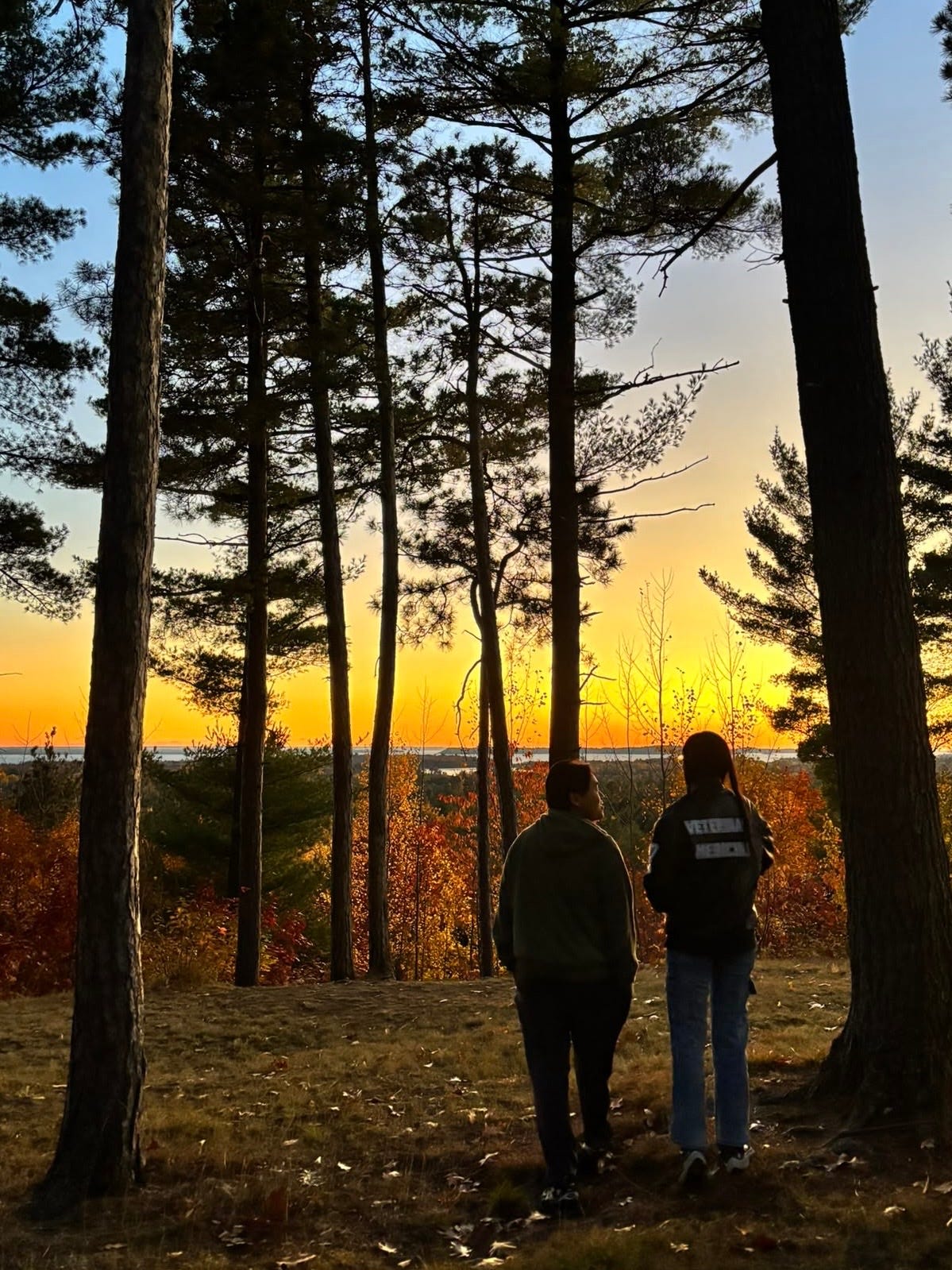
We drove about 5-6 hours to Sagamok. It was beautiful this time of year. We were high enough to look out across the valley, and fall had spread in front of us like a grandma’s patchwork blanket, gold and green and orange and red, with one silver line of river sewn down the middle. I’m grateful that the community welcomed us in, and for the chance to help provide veterinary services while we were there.

Over two surgical days, I performed two spays and two neuters on my own, with supervision from veterinarians. The spays didn’t go as fast as I wanted them to, and the vets still had to guide me, which left me frustrated and a little embarrassed at how slow I was. But giving myself some grace is fair this early in my career. With continuous curiosity and openness to feedback, the learning and the getting better will come eventually. “Slow is smooth and smooth is fast,” as one of my veterinary mentors said. I’m choosing to believe them, well, mostly because the alternative is believing I’m just slow.
I used to think spays and neuters were the easy, boring surgeries, and I had that completely wrong! They are like cooking fried rice. Making a plate of fried rice is very easy. Making a good plate is very hard, one where sophisticated technique lets each ingredient shine on its own and still come together like a harmonious orchestra. Spays are the same, with buckets full of tips and tricks to help you perform them with grace.
Then there are the buckets full of things that can go wrong. What do you do when you drop a pedicle? When you cut a spleen? When your patient is in heat or pregnant and everything is more fragile than the practice model promised? When your freshly spayed patient is bleeding internally and you have to work out from where? Spays are usually fine, but when they aren’t, they are a literal shitshow under a sterile drape.
This early in my career, I know myself. My first response to most of these is still to panic and to hold back the urge to run into the bathroom and cry (you can do that afterwards). Yet on this rotation I’ve learned a lot of ways to problem-solve. I can’t promise I will remember any of them when the time comes for me to drop a pedicle, but I do know it has happened countless times to vets who are now successful and competent, and there is always, absolutely, a way through.
I still love surgery! I still do! And I will still be open to learning how to do foreign body removals and cystotomies. But before I push myself towards the harder ones, I want to set my expectations right and be really, really good at the seemingly “simple” surgeries first. I also want to keep asking myself: what else have I labelled as simple without understanding what makes it hard?
Surgery is fun, but I’m also learning to accept that this will be a work in progress for a long time. Still looking for the right angle, for the toenails or for the rest of it.